EN
EN


Core Technology of Fiber Optic Marking Machines
What Is a Fiber Optic Marking Machine and How Does It Work?
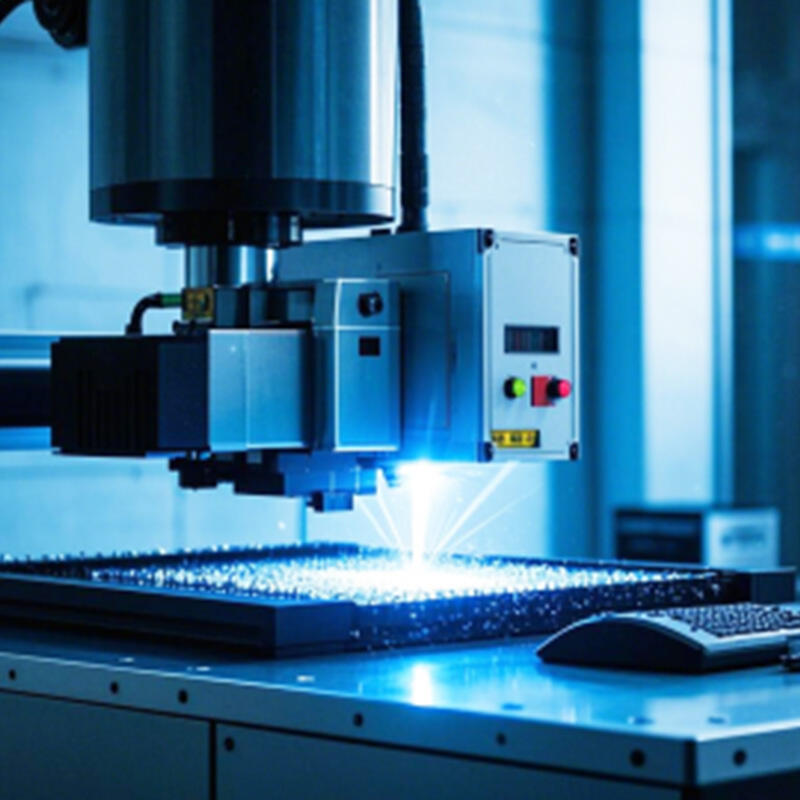
Fiber optic marking machines work by using intense laser beams created from special optical fibers containing rare earth elements. These systems typically have three main parts working together the laser diode that provides power, the fiber itself which acts as both medium and amplifier, plus whatever delivers the actual beam to the material being marked. When turned on, the pump sends light through these fibers where either ytterbium or erbium gets excited enough to generate that specific 1064nm wavelength we all know so well. What happens next? Well, this super focused beam basically burns away or changes the surface at an incredibly fine level of detail. That makes these machines perfect for putting those tiny serial numbers, scanning codes, or company logos right onto products without damaging them in any significant way.
The Role of Laser Technologies (MOPA, Q-Switch) in Fiber Systems
Fiber laser markers employ two key modulation technologies:
- MOPA (Master Oscillator Power Amplifier) designs allow adjustable pulse durations (10–1000 ns), enabling precise control for applications ranging from deep steel engraving to annealing colored metals.
- Q-Switch systems use acoustic-optic crystals to generate high-peak pulses, excelling at marking hard alloys like titanium.
While MOPA offers greater versatility for mixed-material production lines, Q-Switch remains cost-effective for single-material, high-volume tasks.
Why the 1064 nm Wavelength Excels in Metal Material Absorption
At around 1064 nm, infrared light gets absorbed by most metals such as aluminum and stainless steel at rates between 60 to maybe even 80 percent. That's way better than what we see with CO2 lasers operating at their 10.6 micrometer wavelength where absorption drops below 20%. Why does this happen? Well, it has something to do with how metal atoms are arranged at the atomic level. When photons hit these materials at the right wavelength, they give just enough energy to kick those electrons into action without causing too much unwanted heating throughout the material. A study that came out last year in Photonics Journal actually showed some pretty interesting results too. They found that using 1064 nm wavelengths cuts down on those pesky heat affected areas by roughly 35 or so percent when compared against other types of fiber lasers available today.
Fiber Laser vs CO2 Laser: Key Differences in Performance and Application
Fundamental Differences Between Fiber and CO2 Lasers in Industrial Use
Fiber lasers work by generating light at around 1,064 nanometers through special fibers doped with rare earth elements. CO2 lasers take a different approach altogether, operating at about 10.6 micrometers when they excite certain gas mixtures inside their chambers. These basic differences lead to very different results when working with materials like stainless steel. The absorption rate for fiber lasers can reach as high as 75%, whereas CO2 lasers barely hit 15% according to data from the Laser Institute of America back in 2023. Another key advantage of fiber technology lies in how it delivers the laser beam. Instead of traditional methods, these systems rely on flexible optical cables which allow quicker movement across workpieces and cut down on energy losses during transmission. This makes them especially well suited for integration with robots where speed and precision matter most.
Superiority of Fiber Lasers in Marking Metals Due to Absorption Efficiency
At around 1,064 nanometers, this wavelength matches up pretty well with how electrons behave in metal surfaces. That's why fiber lasers can etch stainless steel so fast these days, hitting speeds of about 3.5 meters per second. Compare that to CO2 lasers which struggle along at just 0.8 m/s. Industry insiders note another advantage too fiber laser setups need roughly 40 percent less electricity when making those half millimeter deep marks on aluminum parts. Now for plastics and other non conductive stuff where CO2 lasers traditionally worked better, many factories have started adding special compounds to their materials. These additives help bridge the gap so fiber lasers can actually make clean marks on polymers despite the material differences.
Speed, Precision, and Repeatability Benchmarks Across Materials
| Material | Fiber Laser Speed | CO2 Laser Speed | Position Accuracy |
|---|---|---|---|
| Stainless Steel | 3.2 m/s | 0.6 m/s | ±5 μm |
| Anodized Aluminum | 2.8 m/s | 0.7 m/s | ±8 μm |
| Polycarbonate | 1.1 m/s | 2.4 m/s | ±15 μm |
Fiber lasers maintain <0.03 mm kerf width variance over 10,000 cycles on metals, demonstrating three times greater consistency than CO2 systems in long-term performance testing.
When CO2 Lasers Are Still Preferable: Non-Metal Applications and Edge Cases
CO2 lasers still hold their ground in specific non-metal applications even though fiber lasers dominate most metal processing work. The numbers back this up too wood and acrylic engraving speeds jump about 62% faster with CO2 tech because these materials soak up the laser energy better. Another big plus is how the longer wavelength prevents those nasty burn through issues on really thin stuff under a millimeter thick something that matters a lot in medical packaging applications. While hybrid systems combining both technologies are becoming more common, many shops stick with standalone CO2 units when their workload consists mostly non-metal materials. For facilities where around 80% or more of what gets processed isn't metal at all, these traditional CO2 setups often make more financial sense despite newer alternatives on the market.
Precision, Durability, and Maintenance Advantages of Fiber Systems
Fiber optic marking machines achieve remarkable precision thanks to their sophisticated beam control technology, which keeps spot sizes below 20 microns. What does this mean in practice? It allows for incredibly accurate markings on complex items such as detailed QR codes and tiny serial numbers, even when working with curved surfaces or small parts. These machines actually outperform traditional mechanical engraving methods by quite a margin. When applied to stainless steel materials, these fiber lasers create heat affected zones measuring less than 25 microns. This minimal thermal impact preserves the structural properties of the metal, which is why many manufacturers in critical sectors like medical device production rely heavily on this technology. The reduced risk of material degradation makes all the difference in applications where product reliability is absolutely essential.
Longer Lifespan Through Solid-State Design and Component Reliability
With no moving parts, fiber laser modules exhibit minimal mechanical wear, achieving operational lifespans exceeding 100,000 hours in continuous production environments. Their modular design allows targeted component replacement instead of full system overhauls, reducing downtime by 65% compared to diode-pumped alternatives.
Low Maintenance Requirements Compared to Other Laser and Non-Laser Systems
Fiber laser systems basically get rid of those annoying tasks like refilling gases and constantly adjusting mirrors. They need about 85 percent less maintenance work overall when compared with traditional CO2 laser setups. According to a recent retrofit analysis from 2024, companies saved around twelve thousand dollars each year on maintenance expenses after making the switch from mechanical stamping machines to fiber marking tech. The sealed optical pathways stop dust and other particles from getting inside, which is why so many auto parts makers have gone this route lately. About three quarters of these manufacturers actually listed this protection against contamination as one of the main reasons they started using fiber lasers back in 2023.
Balancing Durability with Sensitivity to Optical Contamination
Although resistant to vibration and temperature fluctuations (-20°C to 50°C operational range), fiber laser output windows degrade 40% faster when marking corrosive materials like PVC or fiberglass. Implementing inspection protocols every 500 operational hours helps maintain over 95% beam consistency throughout a system’s 5-year service life.
Fiber Optic Marking Machine: Operational Economics
Total Cost of Ownership: Energy Efficiency and Operational Economics
Energy Consumption and Sustainability: Fiber Lasers Lead in Efficiency
Fiber optic marking machines actually use about 30 to 50 percent less power compared to those old CO2 laser systems because they have a solid state build and don't need as much cooling. The difference comes down to how these machines work fundamentally different from gas based lasers which waste a lot of energy just keeping those plasma tubes running. Fiber lasers hit around 28% wall plug efficiency meaning most of what goes in electrically gets turned into actual laser light instead of heat loss. For businesses looking at their bottom line, this means saving anywhere between twelve hundred to two thousand five hundred dollars each year on electricity costs alone. That kind of money adds up fast over time, especially when companies are trying to cut down on their environmental footprint while still staying profitable.
Initial Investment vs Long-Term ROI for Fiber Optic Marking Machines
Although fiber lasers have a 15–25% higher initial cost ($35k–$80k) than CO2 systems, their return on investment typically occurs within 18–24 months. Key contributors include:
- 70% lower maintenance costs from sealed optical paths
- Three times longer component lifespan (100,000+ hours for laser diodes vs 30,000 for CO2 tubes)
- No consumables such as gas refills or replacement mirrors
Operational Cost Analysis Over a 5–10 Year Lifecycle
An 8-year lifecycle analysis reveals substantial cost advantages for fiber lasers:
| Cost Factor | Fiber Laser | CO2 Laser |
|---|---|---|
| Energy (8 yrs) | $15,600 | $44,000 |
| Maintenance (8 yrs) | $9,200 | $38,500 |
| Downtime Losses | 2.1% | 7.8% |
These savings result in net gains of $220,000–$380,000 over eight years, solidifying fiber systems as the preferred choice for high-volume manufacturing despite requiring strict optical cleanliness protocols.
Material Compatibility and Comparison with Non-Laser Marking Methods
Controlled Thermal Impact: Fiber Lasers on Heat-Sensitive and Coated Materials
Fiber lasers minimize thermal damage, producing heat-affected zones 60% smaller than CO₂ lasers on coated metals. This precision prevents warping in aerospace-grade aluminum and preserves anti-corrosion properties on galvanized steel. Studies indicate fiber lasers reduce delamination risks by 34% when marking polymer-coated electronics, outperforming mechanical engraving methods (Envion 2023).
Matching Wavelengths to Substrates: Fiber, CO₂, and UV Laser Applications
Fiber lasers operating at 1064 nm wavelength absorb chromium and titanium alloys about eight times better than CO2 lasers do, which means manufacturers can create permanent markings on these metals without needing to prep the surface first. When it comes to working with organic stuff like wood or glass, CO2 lasers at 10.6 microns perform really well too, since they get absorbed almost completely by things made from cellulose. For those tricky thermosensitive plastics often used in medical devices, UV lasers at 355 nm wavelength work best because they cut down on heat damage by roughly two thirds during production processes.
| Laser Type | Optimal Materials | Key Advantage |
|---|---|---|
| Fiber | Metals, ceramics | Zero consumables |
| CO₂ | Wood, acrylic | Low reflectivity |
| UV | Plastics, glass | Micro-cracking resistance |
Case Study: Effective Marking of Stainless Steel, Aluminum, and Coated Surfaces
During testing in car manufacturing, fiber lasers managed to hit 0.02 mm accuracy on brake calipers coated with powder, all while keeping around 98% of the coating intact after marking. When it comes to anodized aluminum parts, the contrast from laser marks stands out about 3.5 times more clearly than what dot peen markers can produce. The medical field has seen some impressive gains too. Hospitals and clinics using fiber lasers report changing between different surgical tool markings 40% quicker than they could with traditional inkjet printers. This speed difference makes a big difference during emergency procedures where every second counts.
FAQ
What is a fiber optic marking machine?
It's a device that uses laser beams generated from special optical fibers to mark materials like metals with precision and without significant damage.
How do fiber lasers compare with CO2 lasers?
Fiber lasers operate on a shorter wavelength and are better at marking metals, providing higher efficiency and cost-effectiveness for metal applications compared to CO2 lasers.
Why do fiber lasers have lower maintenance requirements?
They have a solid-state design without moving parts, which reduces mechanical wear and cuts down on frequent maintenance tasks such as gas refills.
Are fiber lasers suitable for non-metal materials?
While fiber lasers excel with metals, CO2 lasers are often preferred for non-metal materials like wood and acrylic due to their absorption characteristics.
What are the cost benefits of using fiber lasers?
Despite higher initial costs, fiber lasers offer lower maintenance expenses, longer component lifespan, and reduced energy consumption, leading to substantial savings over time.
Table of Contents
- Core Technology of Fiber Optic Marking Machines
- Fiber Laser vs CO2 Laser: Key Differences in Performance and Application
- Precision, Durability, and Maintenance Advantages of Fiber Systems
- Fiber Optic Marking Machine: Operational Economics
- Material Compatibility and Comparison with Non-Laser Marking Methods
- Controlled Thermal Impact: Fiber Lasers on Heat-Sensitive and Coated Materials
- Matching Wavelengths to Substrates: Fiber, CO₂, and UV Laser Applications
- Case Study: Effective Marking of Stainless Steel, Aluminum, and Coated Surfaces
- FAQ