EN
EN

Advanced Material Processing with Laser Cutting Systems
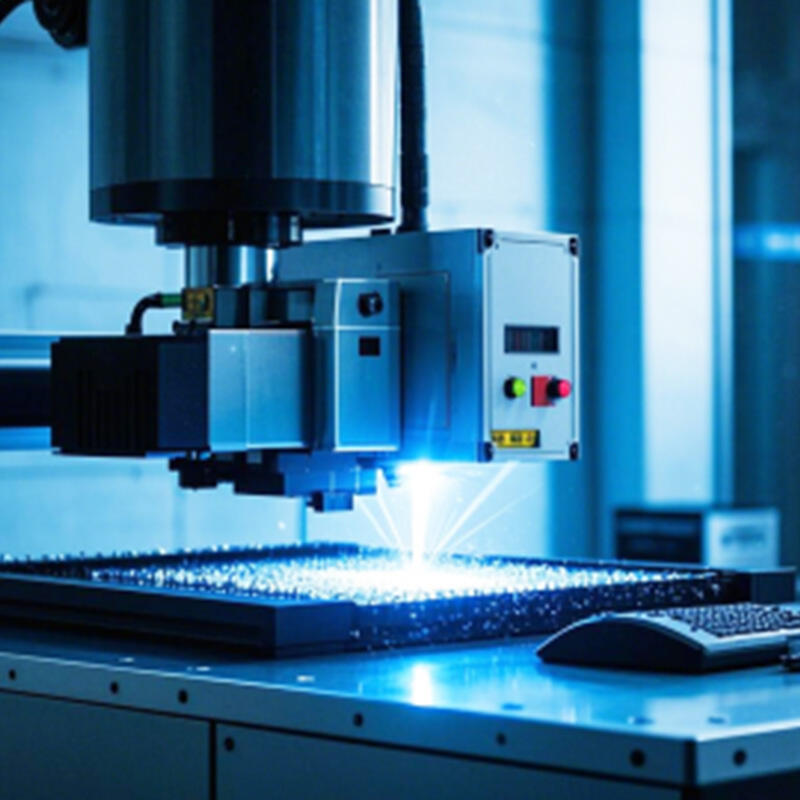
Contemporary industry has seen the rapid growth of laser cutting systems for high precision processing of new materials in the micron scale. These perform with ±5μm accuracy on metals, ceramics and plastics (Industrial Laser Review 2024) such systems allow manufacturers to maintain such demanding electronics component and industrial enclosure tolerances. Non-contact cutting eliminates the wear and tear associated with mechanical cutting methods thereby reducing material wastage up to 30%.
Copper and Brass Component Fabrication Techniques
To handle the high thermal conductivity of copper and brass, pulsed fiber lasers deliver energy in a series of pulses, which reduces heat conduction. This method cut oxidation by 42% relative to continuous- wave CO2 systems (Precision Manufacturing Quarterly 2023). 0.1mm thickness brass sheet can be cut at a speed of 12m/min using recent technology of the laser beam modulation keeping the edge roughness below Ra 1.6μm.
Gold Circuit Patterning for Microelectronics
Ultrafast picosecond lasers create 8μm-wide gold traces on polyimide substrates without microcracks—a 60% improvement over photochemical etching (Microelectronics Journal 2023). The process uses 532nm green wavelengths absorbed efficiently by gold, achieving 98% conductivity retention through <0.5% heat-affected zone (HAZ) penetration.
Stainless Steel Enclosure Precision Cutting
High-power disk lasers cut 2mm 316L stainless steel with 15° perpendicularity tolerance, critical for EMI-shielded electronics enclosures. Adaptive gas nozzles maintain 0.8MPa nitrogen pressure during cutting, limiting surface oxidation to under 5nm thickness (Materials Processing Today 2024). Automated vision systems verify cut dimensions within 20μm accuracy before post-processing stages.
Fiber Lasers vs CO2 Systems in Electronics Production
Reflective Material Processing with Green Lasers
Green (515, 532 nm) fiber lasers excel at processing highly reflective metals such as copper and gold alloys. These materials stave off 90% or more of the infrared laser energy, but adsorb 65-80% green, allowing for finished cutting of 0.1mm-thick circuitry components without additional furnace tooling. Easing 5G antenna, flexible PCB applicationsThe latest breakthroughs come from pulsed green lasers, which achieve 5 μm resolution in microelectronic patterning, which are critical for 5G antenna manufacturing and flexible PCB applications.
Throughput Comparison: 10W vs 30W Machines
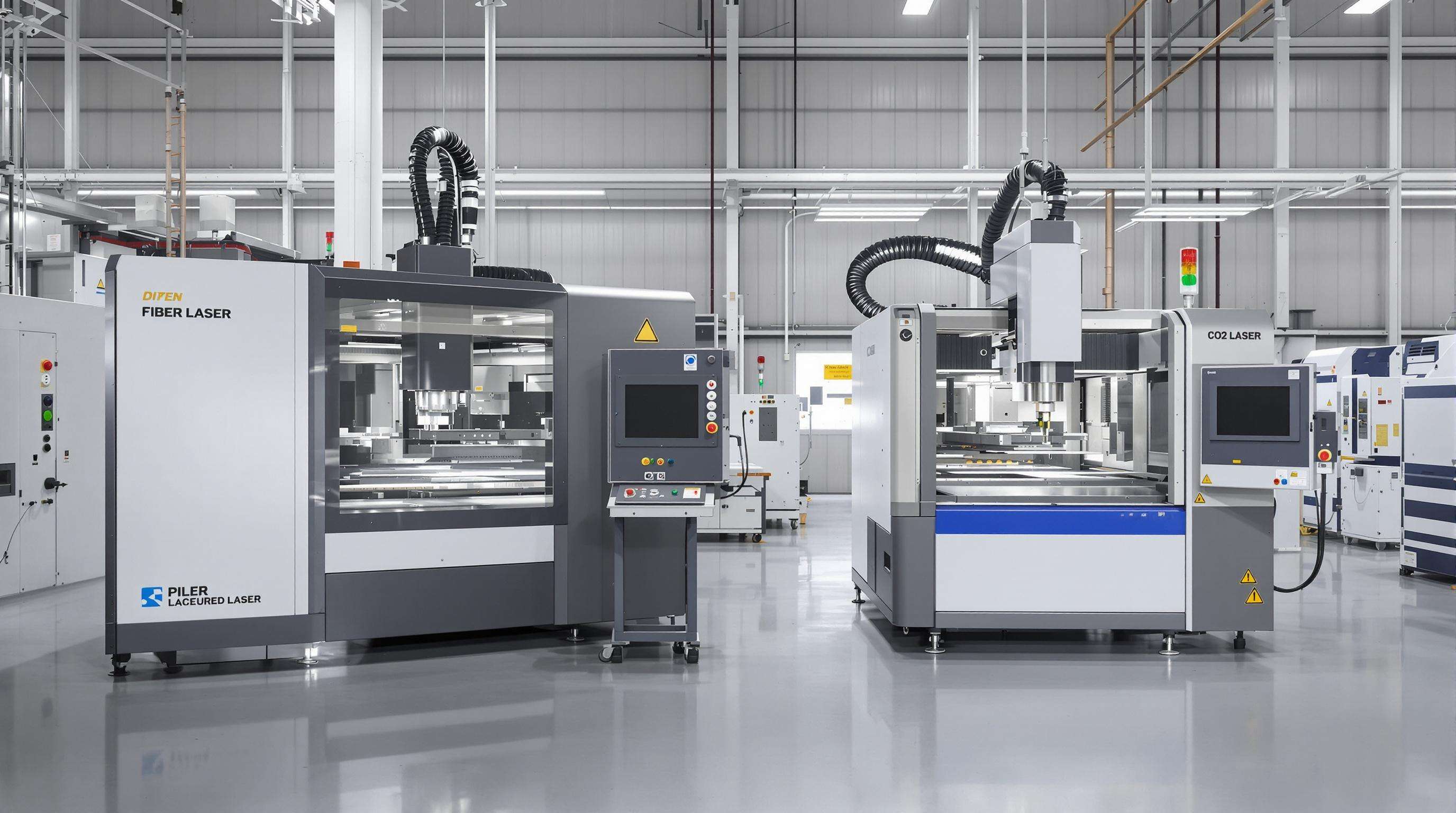
At 10-30W, low-power fiber lasers are now as fast for sheet metal processing as CO2 systems and use 40% less power. A 30W fiber laser will cut 1 mm stainless at 12 m/min whereas 100W CO 2 will cut the same at 8 m/min. For prototyping labs, 10W systems delivers sufficient 0.5-3 mm material processing with 50% reduced cost of entry, whereas the 30W model is suitable for production requirements down to <20 μm in positioning repeatability.
Energy Efficiency in Small Laser Engraving Systems
The latest fiber laser engraving systems offer a 30% wall-plug efficiency as opposed to 8-12% in CO2, this offers a annual reduction in energy costs of $2,800 per machine operating on a continuous basis. Small footprints Compact air-cooled designs eliminate large chillers to reduce workstation footprints up to 60%. Smart power modulation controls <0.5 °C thermal drift over 8-h marking sessions, delivering 20 μm engraving depth control over ceramic substrates and anodized aluminum enclosures.
Smart Manufacturing Integration Strategies
IoT-Enabled Laser Welding Process Control
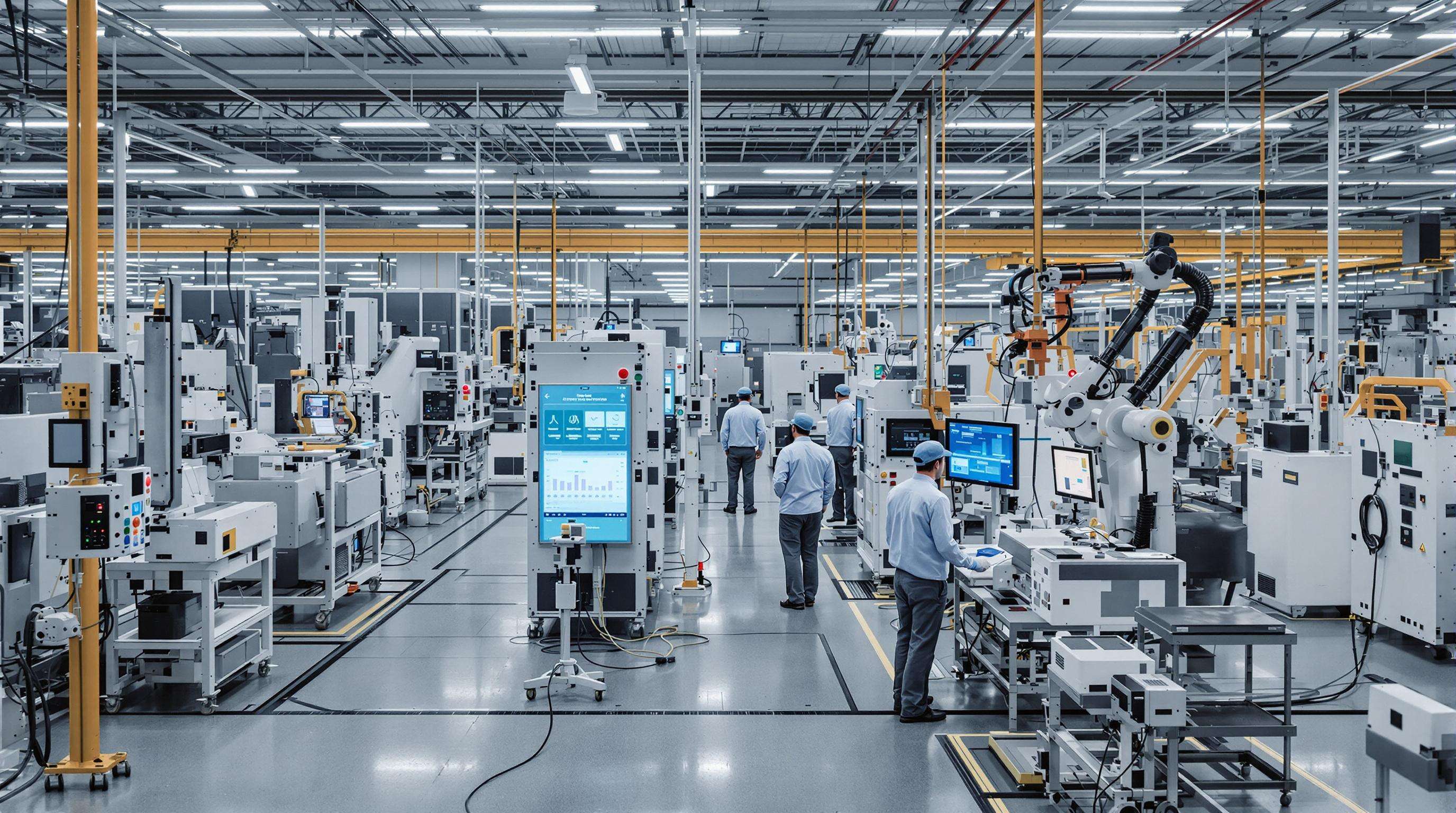
Contemporary IoT (Internet of Things) sensors are designed to keep track of heat spread, joint position and material deformation as the welding process is underway. These linked systems automatically set power levels (±0.5% accuracy) and gas flows when tolerance deviations exceed pre-programmed limits, as for welding copper busbars and battery terminals. A State of Art Review in Smart Manufacturing reports value for plants using IoT-enabled laser controls of 18% faster setup times and 12% less post-weld rework when compared to manual process control. Edge computing modules embedded in-process, achieving thermal imaging at 120 Hz for adaptive path correction for high-speed (1μm/min) welding of thin stainless steel foils (0.1–0.3-mm thickness).
AI-Powered Defect Detection in Marking Operations
AI (Artificial Intelligence) algorithms detect 14+ quality features in laser marked components such as contrast, edge precision, and subsurface carbonization depth. Deep learning network trained on 50000+ defect images can obtain the accuracy of 99.2% in such micro-cracks identification (5 μm) as being engraved serial number of PCB. According to industry media, manufacturers achieve a 34% reduction in marking-related scrap rates on existing conveyors running at 12,000 characters/hour using with these systems. Real-time spectral analysis tools cross-check emission patterns against materials databases, immediately noting any deviation from desired oxygen levels that would cause annealing discoloration in the markings on medical devices.
Ultrafast Laser Micromachining Breakthroughs
Ultrafast laser micromachining has emerged as a transformative force in precision manufacturing, particularly for electronics components requiring sub-micron accuracy. These systems utilize pulse durations below 1 picosecond to achieve material ablation rates exceeding 10 μm³/μJ while maintaining minimal heat transfer to surrounding areas.
Semiconductor Wafer Dicing Innovations
Currently, femtosecond laser systems are capable of 5 um kerf widths with <0.1% edge chipping for 300mm silicon wafers, which is a 60% improvement over mechanical dicing. The technology supports speeds 50% faster than nanosecond lasers by dispensing with post-processing for thermal damage removal. Semiconductor applications are the largest driver of ultrafast lasers with 42% of the market fuelled by this application and of that portion, wafer dicing is the catalyst, making 68%.
3D Interconnects Fabrication for PCBs
Ultrafast laser drilling with 25μm vias and 10:1 aspect ratios in FR-4 substrate allows high-density interconnection for 5G modules. State-of-the-art beam-shaping techniques [17] actually ensure a ±2 μm alignment accuracy at 24-layer PCB stackups, crucial in millimeter-wave applications. Recent measurements obtained with this system demonstrate 98% via wall verticality in 100μm thick polyimide films, providing a solution to signal integrity concerns in flexible hybrid electronics.
Laser Tube Processing for Component Assembly
Heat-Affected Zone Control in Welding
With pulsed operation and adaptive power modulation, modern laser tube processing systems attain heat-affected zone (HAZ) widths of less than 0.4 mm for stainless steel welding. A 2023 WRC report described how variation of the peak power (1,500 W) and pulse duration (2–20 ms) reduced thermal distortion by 62% more than conventional methods. Closed-loop control of such temperature (±15°C of target) of weld pool in real-time system, helps in maintaining material integrity.
| Parameter | HAZ Reduction (%) | Weld Strength (MPa) |
|---|---|---|
| Pulsed (500W, 2ms) | 72 | 520 |
| Continuous (1kW) | 38 | 480 |
Automated Fixture Integration Solutions
Self-fixturing techniques for the laser tube cutting reduce standard jigs by 85% using precision machined tab and slot style joints. Recent industry reports are now stating that adaptive fixtures cut set-up time by 60% in auto parts manufacturing. Built-in IoT sensors offer ±0.05 mm position feedback, allowing real-time clamping force adjustment during high-speed processing patterns. These systems can also be programmed to automatically adjust to CAD-specified tolerance levels and offer first pass rates of over 99.2% for mixed material-blend batches.
Market Trends in Laser Accessory Development
Roller Pressing Machine Compatibility Features
Since the demand for hybrid manufacturing processes is increasing, the combination of roller press and laser cutting tool can be considered as an essential innovation. The foremost manufacturers placed a premium on compatibility features that simplify feeding and aligning materials. One study in 2023 discovered that a system that pairs laser precision with roller-based automation can cut setup times for sheet metal production by 42 pe How LxfARs Work LxfARs function based on a direct optical alignment between the laser head and the feeder and between the laser head and the puller while processing narrow strips. These data-rich solutions are Industry 4.0-ready and come equipped with IoT sensors that provide data on roller tension and workpiece positioning in real time, responding to expanding need for multi-process automation in electronics component manufacturing. MQL solutions with standardized mounting interfaces as well as programmable pressure control expand on adaptability for stainless steel, copper and brass substrates.
Modular Laser Engraving Attachments
Small footprint laser engraving modules are changing the game in flexible small-batch production with 78% of users listing faster job changes as their company's biggest reason for adopting it. The latest designs have toolless alignment, and universal mounts to fit 3 axis CNC machines. Energy-saving 10W fiber laser models reach marking rates on anodized aluminum that are 20% faster than before (compared with the 2020 version) and uses 15% less electricity. This trend of modular systems reflects the larger industry path to scaled production cells, notably in medical device prototyping and consumer electronics personalization. These attachments hold micron level accuracy for over 500 duty cycles, which is suitable for high-mix PCB serialization applications.
FAQ
What are the advantages of using laser cutting systems for material processing?
Laser cutting systems offer high precision processing, achieving accuracy on the micron scale while eliminating mechanical wear and tear, thus reducing material wastage. They are efficient for processing metals, ceramics, and plastics with minimal environmental impact.
How do fiber lasers and CO2 systems compare in electronics production?
Fiber lasers are more energy-efficient, using 40% less power compared to CO2 systems. They offer faster processing speeds and better energy efficiency for small engraving systems and are suitable for sheet metal processing.
How is IoT changing laser welding processes?
IoT sensors track heat spread, joint position, and material deformation in real-time, allowing automatic adjustments to power levels and gas flows, resulting in faster setup times and reduced post-weld rework.