EN
EN

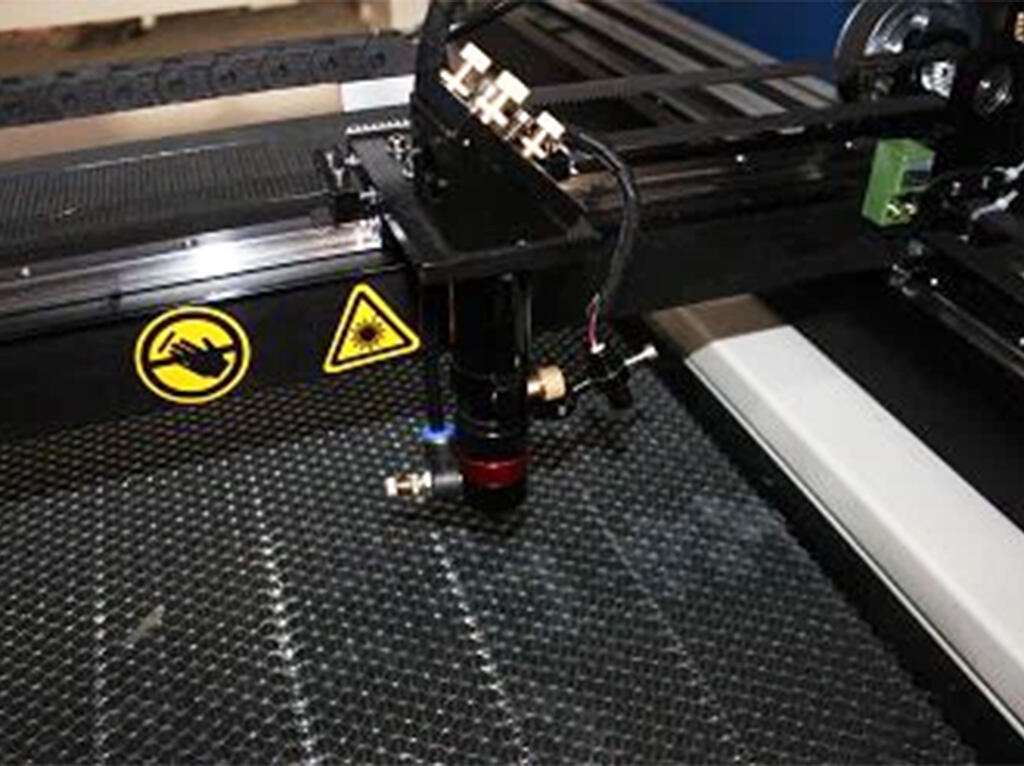
Core Laser Technologies Powering Custom Solutions
Modern manufacturing relies on fiber optic and CO2 laser systems to deliver precision at scale. These technologies form the foundation of custom laser solutions, with most industrial applications requiring tailored configurations to meet specific material processing demands.
Fiber Optic vs CO2 Lasers: Technical Comparison
Fiber lasers (1,070 nm wavelength) specialize in cutting reflective metals like aluminum and copper, while CO2 systems (10,600 nm) excel at processing non-metals through thermal absorption. Key differences include:
| Attribute | Fiber Laser | CO2 Laser |
|---|---|---|
| Material Thickness | ≈ 25mm metals | ≈ 20mm non-metals |
| Maintenance Costs | $12k/year | $18k/year |
Advanced fiber lasers achieve 0.01mm cutting precision for semiconductor components, while CO2 systems remain dominant in textile and polymer processing.
Breakthroughs in Pulsed Laser Cleaning Systems
Next-generation pulsed lasers remove oxidation layers from aerospace components at 150 cm²/min without substrate damage—four times faster than chemical methods. These systems combine 100-500ns pulse durations with intelligent ablation detection for 99.8% accuracy. Industry studies show they reduce production downtime by 40% compared to mechanical descaling.
Custom Laser Equipment in Precision Metal Fabrication
Precision metal fabrication achieves micron-level accuracy through custom laser systems engineered for specialized challenges. These solutions optimize wavelength, pulse duration, and power output for materials like titanium alloys and medical-grade stainless steel.
Micro-Cutting Solutions for Aerospace Components
Aerospace manufacturers use fiber laser micro-cutting systems to process turbine blades and fuel injectors with ≈ 10µm tolerances. Advanced systems achieve 5µm accuracy in aerospace-grade Inconel, eliminating post-processing for flight-critical components. Pulsed lasers cut 0.2mm titanium sheets at 120mm/s while maintaining surface roughness below Ra 1.6µm.
High-Speed Engraving for Medical Instruments
Surgical tool manufacturers require nanosecond-pulse laser markers that imprint FDA-compliant UDI codes on curved stainless steel without surface pitting. Modern systems engrave 0.8mm-tall characters on instruments in 1.2 seconds—300% faster than mechanical engraving. Over 95% of hospitals prefer laser-marked instruments for sterilization compliance.
Welding Innovations for Automotive Battery Packs
Automotive engineers use 3kW fiber laser welders to join 0.6mm-thick battery foils with ≈ 50µm accuracy. These systems create hermetic seals at 80cm/min, preventing electrolyte leakage under vibration. Pulsed laser systems show a 40% reduction in weld defects for dissimilar metal joints in EV batteries.
Industry-Specific Custom Laser Applications
Semiconductor Wafer Marking Systems
Fiber lasers achieve sub-10µm marking precision on silicon wafers without compromising structural integrity. Custom solutions reduce wafer identification errors by 87% compared to mechanical scribing. Tunable wavelengths avoid silicon damage while creating permanent traceability codes critical for chip production.
Pharmaceutical Serialization Solutions
UV laser systems meet strict serialization requirements under global regulations. They imprint batch numbers and 2D barcodes on blister packs at 1,200 units/minute—40% faster than inkjet without consumables. Tests show 99.97% readability after aging, exceeding compliance thresholds and helping prevent counterfeit drug losses.
Packaging Industry Dematerialization Trends
Laser-dematerialized packaging grows at 34% CAGR as CO2 lasers replace adhesive labels in beverage manufacturing, eliminating millions of tons of waste annually. Smart systems synchronize with digital twins to adjust markings across multiple packaging formats, reducing per-unit costs by 18-22%.
Custom Laser Equipment for Smart Manufacturing
Smart manufacturing integrates custom laser equipment as core Industry 4.0 components, combining precision processing with adaptive automation. These systems dynamically adjust to material thickness, composition, and throughput demands.
AI-Driven Parameter Optimization
Modern platforms use neural networks to analyze workpiece geometry and thermal patterns in real time, autonomously adjusting power settings (±0.5% accuracy). Machine vision integration reduces material waste by 18% by compensating for sheet metal variations. Key developments include:
- Self-learning algorithms for multi-axis cutting paths
- Adaptive pulse control for composite materials
- Closed-loop feedback preventing plasma interference
These AI enhancements enable switching between aerospace titanium and medical polymers without manual recalibration.
IoT-Enabled Predictive Maintenance
Smart laser systems embed 14+ sensor types streaming data to central dashboards. Manufacturers report 73% fewer unplanned downtime incidents through predictive maintenance. The framework includes:
- Vibration analysis predicting component wear
- Power supply stability tracking with automatic failover
- Cloud-based logs syncing with enterprise systems
This monitoring extends laser source lifetimes by 30% in high-production environments.
Economic Impact of Custom Laser Solutions
Custom laser solutions reshape manufacturing economics, offering advantages in efficiency and responsiveness. By matching laser capabilities with production needs, businesses unlock cost optimization and value creation.
ROI Analysis: Custom vs Standard Systems
Custom systems demonstrate 23-41% higher ROI over standard models within three years. While requiring greater upfront investment, they reduce material waste and energy use. One aerospace supplier achieved full ROI in 18 months with 34% faster production and 19% lower per-unit costs.
Key financial benefits:
- 62% less post-processing labor
- 57% longer maintenance intervals
- 89% material utilization through AI optimization
$16.8B Industrial Laser Market Projections
The industrial laser sector grows at 9.2% CAGR through 2028, driven by demand for flexible systems. Asia-Pacific leads adoption with 47% of new installations, while Europe prioritizes UV lasers for microelectronics. Hybrid systems combining additive and subtractive capabilities account for 38% of projected growth.
FAQ
What are the main types of lasers used in custom solutions?
The main types of lasers used in custom solutions are fiber optic and CO2 lasers. Fiber lasers are ideal for cutting reflective metals, while CO2 lasers excel in processing non-metals.
How does fiber laser technology benefit aerospace manufacturing?
Fiber laser technology benefits aerospace manufacturing by enabling precise cutting of turbine blades and fuel injectors, achieving tolerances as low as 10µm, and eliminating the need for post-processing in critical components.
What advantages do custom laser systems offer over standard systems?
Custom laser systems offer advantages such as higher ROI, reduced material waste, longer maintenance intervals, and improved material utilization through AI optimization.